
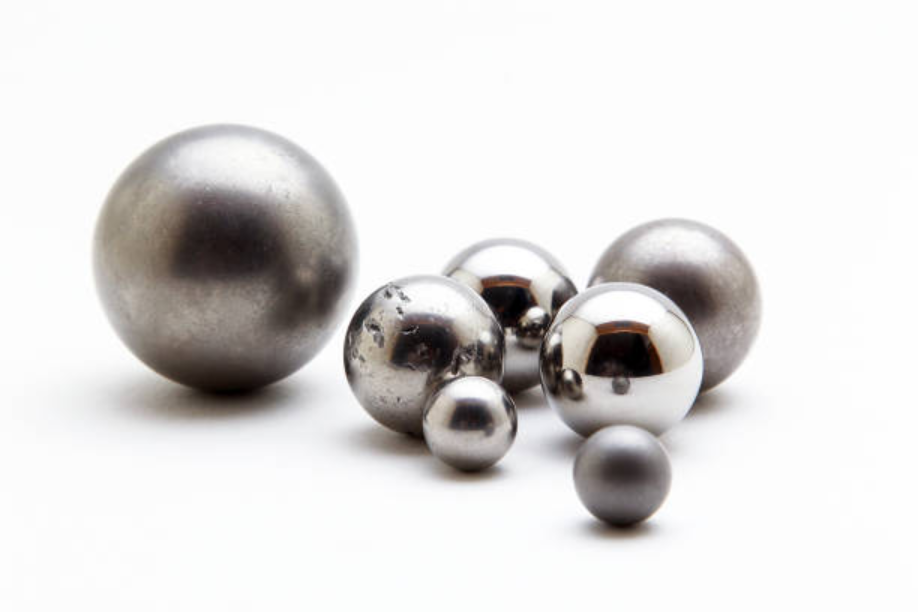
Carbon steel balls are precision-engineered spherical components made from steel alloyed with carbon. They are widely used in industries such as automotive, manufacturing, machinery, and consumer products due to their strength, durability, and reliable performance.
The performance of carbon steel balls is influenced by factors such as material composition, heat treatment, hardness, and surface finish. Understanding these properties is essential for engineers, designers, and buyers to select the right type for specific applications. This guide explores their manufacturing process, key applications, and best practices for maintenance.
Understanding Carbon Grades and Properties
The percentage of carbon alloyed with the steel is the primary determinant of the ball’s final hardness, wear resistance, and overall mechanical properties. Carbon steel balls are typically classified into three main grades:
1. Low Carbon Balls (AISI 1018, 1010)
- Carbon Content: Approximately $0.10\%$ to $0.30\%$
- Characteristics: Feature relatively soft to medium core hardness with high ductility (flexibility). They are usually case hardened (carburized) to create a wear-resistant surface while maintaining a tough, shock-absorbing core.
- Applications: Ideal for light-duty bearings, mechanical components requiring flexibility, and furniture hardware where shock resistance is more important than extreme load capacity.
2. Medium Carbon Balls (AISI 1045, 1050)
- Carbon Content: Approximately $0.30\%$ to $0.60\%$
- Characteristics: Offer a balanced combination of hardness and tensile strength. They are suitable for components exposed to moderate, consistent stress levels.
- Applications: Commonly used in machinery components, general-purpose moderate-load bearings, and various automotive parts.
3. High Carbon Balls (AISI 1085, 1095)
- Carbon Content: Approximately $0.60\%$ to $1.00\%$
- Characteristics: Exhibit the highest attainable hardness and superior wear resistance. These spheres are often through hardened to ensure uniform strength and dimensional stability across the entire component volume.
- Applications: Essential for heavy-duty industrial bearings, high-precision tools, and any application demanding maximum load capacity and resistance to continuous abrasion.
The careful selection of the carbon grade is the first step in optimizing the sphere’s performance under operational load, rotational speed, and wear conditions, a process that manufacturers like Abbott Ball evaluate with precision.
The Precision Manufacturing Process
The production of these spheres is a highly controlled, multi-stage process designed to achieve extreme durability and exceptional dimensional accuracy.
- Wire or Rod Preparation: The process begins by shearing or cutting steel wire or rod stock into small, precise sections known as blanks. These blanks are intentionally cut slightly larger than the final diameter to account for material loss during shaping and finishing.
- Cold or Hot Heading: The blanks are compressed, typically using powerful heading machines, to form rough spherical shapes. Cold heading is standard for smaller, softer spheres, while hot heading is reserved for larger diameters or materials with higher carbon content.
- Flashing: The semi-formed spheres are rolled between specialized hardened steel plates. This action removes the excess material (the equatorial “flash”) and refines the overall spherical shape, crucial for improving initial roundness.
- Heat Treatment: This is a vital metallurgical step applied to achieve the necessary hardness ($\text{HRC}$ or $\text{HRB}$) and mechanical properties. This stage incorporates the two primary hardening methods detailed below.
- Grinding: Rough and precision grinding stages improve the roundness of the sphere and gradually reduce the diameter to meet the exact, tight dimensional tolerances specified by engineering standards.
- Lapping and Polishing: Lapping is a final, fine abrasive process that produces a highly uniform and microscopically smooth surface finish, which is essential for minimizing friction in rotational systems. Polishing may follow to provide an aesthetic or high-quality surface finish for low-friction devices.
- Final Inspection: Every batch undergoes rigorous quality control checks, including assessments of roundness, surface finish, dimensional accuracy, and hardness levels, often using non-destructive testing (NDT) to ensure consistent performance and detect microscopic defects.
Metallurgy and Performance: Heat Treatment Methods
The choice of heat treatment profoundly affects how a carbon steel ball performs under varying stress, making the distinction between these methods fundamental for component selection.
Carburized (Case Hardened) Carbon Steel Balls
This process involves adding carbon to the surface of a low-carbon steel sphere during heating, creating a component with a composite structure.
- Profile: Characterized by a hard outer shell (case) and a relatively soft, ductile core.
- Function: The hard surface provides excellent wear resistance and abrasion protection, while the soft core absorbs shocks and impacts without fracturing.
- Application Suitability: Ideal for applications subjected to intermittent loads, sudden impacts, or non-precision general-purpose use.
Through Hardened Carbon Steel Balls
This treatment is typically applied to high-carbon steel, resulting in a uniform structure throughout the component.
- Profile: Characterized by consistent, high hardness from the surface right through to the core.
- Function: The uniform hardness provides maximum resistance to abrasion, deformation, and high, continuous stress.
- Application Suitability: Required for precision machinery, heavy-duty bearings, and high-load environments where dimensional stability is paramount.
| Feature | Carburized Balls | Through Hardened Balls |
| Hardness Profile | Hard outer shell, soft core | Uniform hardness |
| Impact Handling | High (Ductile core absorbs shock) | Moderate (Higher risk of brittle failure) |
| Wear Resistance | Moderate (Surface-only) | High (Uniform resistance) |
| Best Use | Shock load assemblies | Precision bearings, continuous high load |
Applications and Material Comparisons
Carbon steel balls are a fundamental component in modern engineering, prized for their cost-effectiveness and mechanical resilience in non-corrosive environments. Their robust nature makes them a standard choice in countless products where precision motion, durability, and economical production are critical requirements.
Widespread Applications
The versatility and reliability of carbon steel balls lead to their broad application across several industries:
- Automotive Systems: Used in universal joints, steering mechanisms, and transmission assemblies to ensure smooth motion and reliable power transfer.
- Bearings and Conveyors: Key components in light to medium-duty bearings and conveyor systems where cost efficiency is a significant factor.
- Industrial Machinery: Serve as rollers, check balls in valves and actuators, and components in various gear systems.
- Consumer/Furniture Products: Essential for the rolling action in drawer slides, furniture casters, and internal locking mechanisms.
- Specialty Uses: Include use as agitator balls in aerosol spray cans (to mix contents) and in medical devices requiring consistent low-friction rotation.
Benefits and Primary Limitation
| Category | Description |
| Advantages | High load-bearing Strength, Versatility across grades, Cost-Effectiveness compared to specialty alloys, and good Machinability to high precision. |
| Key Trade-Off | Low Corrosion Resistance. Carbon steel is highly susceptible to rust (oxidation) when exposed to moisture or humidity. |
Carbon vs. Chrome Steel Balls
When environmental demands are higher, comparison with materials like chrome steel (AISI 52100) is necessary. Chrome steel, due to its chromium content, offers higher purity and superior resistance to fatigue and deformation under continuous stress, though at a higher cost.
| Feature | Carbon Steel Balls | Chrome Steel Balls (AISI 52100) |
| Cost | Lower | Higher |
| Corrosion Resistance | Low (Needs protection) | Moderate (Better, but still requires oil) |
| Key Performance | Shock absorption, Cost efficiency | Superior Fatigue Life, High precision, Heavy-duty load |
Optimal Maintenance and Storage Practices
Given their low natural corrosion resistance, proper maintenance and storage protocols are critical to maximizing the operational lifespan of carbon steel spheres.
Cleaning Protocols
- Agents: Use mild solvents or neutral cleaning agents to avoid chemical etching or degradation of the surface material.
- Avoid: Harsh chemicals or abrasive cleaners that can damage the precision finish or remove the protective oil.
- Drying: Thorough drying immediately after cleaning is paramount. Any residual moisture will rapidly initiate oxidation and rust formation.
Lubrication
- Operation: Select the correct application-specific grease or oil based on the assembly’s speed, load, and temperature requirements.
- Storage: Apply a light coating of anti-rust or preservative oil when components are stored or not in immediate use to protect against atmospheric corrosion.
- Caution: Prevent excessive lubrication, as it attracts and traps airborne contaminants (dust and debris), leading to abrasive wear.
Storage Environment
- Conditions: Store spheres in a dry, stable, temperature-controlled environment. Low humidity is essential to prevent atmospheric moisture from causing rust.
- Packaging: Use sealed containers or Vapor-Corrosion Inhibiting (VCI) packaging to create a protective micro-environment against environmental exposure.
- Isolation: Keep stored spheres away from open containers of water, strong cleaning solutions, or solvents that could contaminate the components.
Final Thought
Carbon steel balls represent a fundamental element in mechanical engineering, providing an outstanding balance of mechanical strength, versatility, and economic value. The key to their successful integration lies in the engineer’s ability to precisely match the material grade and heat treatment (carburized vs. through hardened) to the functional requirements of the application, prioritizing shock absorption or high wear resistance as needed. By implementing diligent maintenance and storage protocols, especially effective protection against corrosion, these reliable components are ensured a long and effective operational lifespan. For specific application guidance or technical selection support, please contact us.
Frequently Asked Questions
- What are carbon steel balls used for?
They are used in automotive systems, machinery, furniture hardware, bearings, and household devices, providing reliable and cost-effective performance.
- How do carburized and through hardened balls differ?
Carburized balls have a hard surface and softer core for shock absorption, while through hardened balls are uniformly hard for continuous load and wear resistance.
- Can carbon steel balls be used in moist environments?
Yes, with rust-preventive oils, protective plating, and storage in controlled environments to prevent corrosion.
- How do carbon steel balls compare to chrome balls?
Carbon balls are cost-effective and easier to machine, while chrome balls offer higher hardness, wear resistance, and precision for demanding applications.
- What is the best way to store carbon steel balls?
Store them in dry, temperature-controlled environments using sealed containers or anti-corrosion packaging with a light protective oil.