
Blind Shipping & Custom Packaging for Precision Ball Orders: What OEM Buyers Should Know

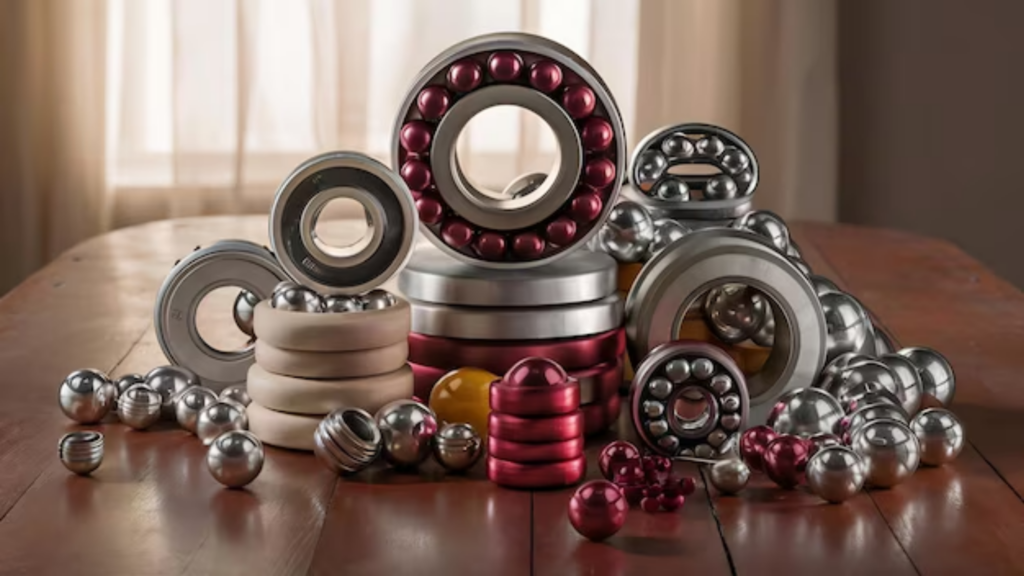
For OEM buyers, ordering precision components is about more than selecting the right size, material, and tolerance. Packaging, labeling, documentation, and shipping instructions can directly affect how efficiently parts move through the supply chain. Abbott Ball supports industrial buyers with precision and semi precision balls, quality inspection, special packaging, blind shipping, documentation, and related services designed around specific customer requirements.
When an OEM purchases thousands or millions of small spherical components, even a minor packaging problem can create unnecessary handling, counting, contamination, identification, or inventory issues. That is why custom packaging ball bearings and blind shipping deserve consideration at the beginning of the purchasing process rather than being treated as simple logistics details.
What Is Blind Shipping for OEM Precision Ball Orders?
Blind shipping is a fulfillment arrangement in which the shipment reaches the end customer without exposing the original manufacturer’s identity on the external shipping documents or packaging.
For OEM buyers, this can be particularly useful when a supplier ships components directly to a customer’s customer, assembly facility, distributor, or other destination.
How Does Blind Shipping Work?
A typical blind shipping arrangement may involve several coordinated steps:
- The OEM places an order with the precision ball supplier.
- The supplier manufactures or prepares the specified components.
- The supplier packages the order according to the OEM’s instructions.
- Shipping documentation uses the designated shipper, consignee, or neutral information where applicable.
- The shipment moves directly to the requested destination.
- The end recipient receives the components without unnecessary supplier identification.
The exact process depends on the customer’s supply-chain requirements and applicable shipping documentation rules.
For OEMs, the biggest advantage is supply-chain flexibility. Direct fulfillment can eliminate unnecessary movement through an OEM warehouse while helping maintain the desired customer relationship.
Why Does Custom Packaging Matter for Precision Ball Orders?
Packaging is not simply a container around a product. For small, high-precision components, packaging can influence protection, identification, handling, inventory control, and production efficiency.
Industry suppliers offer packaging options based on quantity, product characteristics, and customer requirements. For example, precision ball suppliers may provide specific quantities, containers, cartons, drums, pallets, or OEM packaging programs.
What Problems Can Standard Packaging Create?
Standard packaging may not always match an OEM’s production workflow.
Potential issues include:
- Too many components in one container
- Difficult counting or dispensing
- Excessive handling
- Inadequate protection during transportation
- Packaging that takes too much storage space
- Labels that do not match the buyer’s inventory system
- Packaging that requires repacking before production
- Increased risk of mixing different sizes or grades
A custom packaging program can address these challenges before the parts arrive at the production floor.
What Should OEM Buyers Specify for Custom Packaging Ball Bearings?
Before placing an order, OEM purchasing and engineering teams should define packaging requirements as clearly as they define product specifications.
The phrase custom packaging ball bearings can cover many different requirements, so buyers should avoid leaving packaging instructions open-ended.
Quantity Per Package
Determine how many balls should be included in each package.
For example, an OEM may require:
- Fixed piece counts
- Weight-based quantities
- Production-lot quantities
- Kit quantities
- Assembly-specific quantities
- Smaller packs for controlled dispensing
The appropriate configuration depends on how the components are received and consumed.
Container Type
The container should match the product and handling environment.
Potential packaging formats include:
- Plastic containers
- Bags
- Tubes
- Cartons
- Pails
- Drums
- Export pallets
- Specialized OEM packaging
Current precision ball suppliers publicly describe several of these options for volume orders.
Labeling Requirements
Labels are especially important when multiple ball sizes, grades, materials, or production lots are being used.
OEM buyers may specify:
- Part number
- Customer part number
- Material
- Diameter
- Grade
- Quantity
- Lot or batch number
- Purchase order number
- Manufacturing date
- Inspection status
- Barcode or QR code
Clear labeling can reduce receiving errors and simplify traceability.
How Does Packaging Protect Precision Balls?
Precision components require appropriate protection because their performance depends on measurable characteristics such as diameter, sphericity, surface finish, and material properties.
For example, precision balls are manufactured to specific grades, and lower grade numbers generally represent tighter precision. Surface finish and sphericity can also be critical in bearing, valve, guidance, and other demanding applications.
What Should Protective Packaging Control?
A suitable packaging strategy should consider:
- Physical impact
- Abrasion
- Contamination
- Moisture exposure
- Corrosion risk
- Mixing of different components
- Excessive movement inside containers
- Environmental conditions during transportation
The objective is simple: the product should arrive in a condition consistent with the required specification.
Packaging should therefore be selected based on the material, surface condition, application, transportation method, and expected storage environment.
Why Is Packaging Especially Important for Precision Steel Balls?
Precision steel balls are commonly used in demanding mechanical applications where dimensional consistency and surface characteristics matter.
These components can be manufactured from different steel grades and other materials depending on the application. Precision ball manufacturers commonly offer products for bearings, valves, aerospace systems, automotive applications, and other industrial uses.
What Can Happen When Packaging Is Poorly Designed?
Poor packaging may increase the possibility of:
- Surface damage
- Contamination
- Corrosion
- Incorrect identification
- Lot mixing
- Receiving delays
- Additional repackaging
- Production interruptions
This is why packaging should be treated as part of the overall quality and logistics strategy.
What Are Precision Metal Balls Used For?
Precision metal balls are used across industries where controlled dimensions, surface quality, hardness, material properties, and repeatable performance are important.
Common applications include:
- Bearings
- Valves
- Aerospace components
- Automotive systems
- Medical equipment
- Guidance systems
- Industrial machinery
- Instrumentation
- Consumer products
- Specialty assemblies
The required ball specification varies significantly by application. Precision ball suppliers can offer different grades, diameters, materials, hardness levels, and surface finishes to satisfy those requirements.
Why Does the Application Matter?
An OEM should not select packaging independently from the application.
For example, components going into a clean or controlled manufacturing environment may have different packaging expectations from balls being supplied for a heavy industrial assembly.
The packaging should support the product’s intended use and the customer’s receiving and production processes.
How Should OEMs Choose a Precision Ball Manufacturer?
Choosing a precision ball manufacturer involves evaluating more than manufacturing capacity.
An OEM should consider whether the supplier can consistently manage the complete order lifecycle, from specification and inspection through packaging and delivery.
What Capabilities Should Buyers Evaluate?
Look for capabilities such as:
- Precision manufacturing
- Material availability
- Tight dimensional control
- Grade-specific production
- Quality inspection
- Quality documentation
- Custom packaging
- Blind shipping
- Inventory management
- Engineering support
- Testing capabilities
- Flexible order fulfillment
These services can reduce the number of separate suppliers and logistics partners an OEM needs to coordinate.
For example, Abbott Ball publicly identifies blind shipping, special packaging, quality inspection, documentation, inventory management, engineering, and testing among its services.
What Quality Information Should Accompany an OEM Order?
Packaging and documentation should work together.
An OEM may need quality records that allow its purchasing, quality, engineering, and receiving teams to confirm that the shipment matches the approved specification.
Which Documents May Be Important?
Depending on the application and customer requirements, documentation can include:
- Certificate of conformance
- Material certification
- Inspection reports
- Dimensional reports
- Lot traceability
- Test results
- Applicable compliance documentation
- Purchase order references
Precision ball standards such as ABMA and ISO 3290 establish parameters associated with characteristics including size, grade, roundness, hardness, and surface requirements.
The exact documentation package should be agreed upon before production begins.
How Can Custom Packaging Improve OEM Receiving?
Receiving departments often process large quantities of small components. Packaging designed around the receiving workflow can make that process easier.
Instead of opening one large container and manually sorting the contents, an OEM may prefer standardized packs that correspond directly to inventory or production requirements.
What Benefits Can Standardized Packs Provide?
Custom packaging can help with:
- Faster receiving
- Easier inventory counting
- Better part identification
- Reduced repackaging
- Easier warehouse organization
- Simplified line-side delivery
- Improved material handling
- Better lot control
The objective is to make the component easier to move from supplier to warehouse to production.
How Should OEM Buyers Plan Blind Shipping?
Blind shipping works best when requirements are established before the order is released.
The buyer should communicate shipping instructions alongside the technical product requirements.
What Should the Buyer Provide?
Important details may include:
- Ship-from requirements
- Ship-to information
- Consignee information
- Packing instructions
- Label requirements
- Documentation requirements
- Carrier preferences
- Purchase order references
- Customer-facing paperwork requirements
- Special delivery instructions
Clear instructions help reduce last-minute changes and prevent shipping teams from having to interpret requirements during fulfillment.
OEMs should also confirm that blind-shipping arrangements comply with their commercial, contractual, customs, and documentation requirements.
How Do Packaging and Inventory Management Work Together?
For recurring OEM orders, packaging can become part of an inventory management strategy.
Instead of treating every shipment as an independent transaction, buyers can establish consistent packaging specifications for repeat orders.
What Can a Repeatable Packaging Program Accomplish?
A standardized program may help establish:
- Consistent pack quantities
- Consistent labeling
- Repeatable receiving procedures
- Easier inventory forecasting
- Simplified warehouse storage
- More predictable production replenishment
For high-volume applications, this consistency can be more valuable than simply selecting the smallest or least expensive container.
What Should OEMs Ask Before Approving a Packaging Program?
Before approving a packaging specification, purchasing, engineering, quality, and logistics teams should review the complete process.
A few practical questions can help identify problems before the first shipment.
Key Questions to Ask
- What quantity should each package contain?
- How should packages be labeled?
- What identification must appear on each container?
- Does the packaging protect the required surface finish?
- Is corrosion protection required?
- How will lot traceability be maintained?
- Can the supplier provide blind shipping?
- What documents should accompany each shipment?
- Can the same packaging configuration be repeated for future orders?
- Does the packaging fit the customer’s receiving and production process?
- Are special handling or storage conditions required?
Answering these questions early makes the final specification much easier to manage.
Why Should Packaging Be Discussed Before Production?
Packaging decisions can influence production planning, inspection, labeling, inventory handling, and transportation.
Waiting until the order is ready to ship can create avoidable complications.
What Is the Better Approach?
OEM buyers should include packaging requirements in the initial RFQ or purchase-order discussion.
A complete request might specify:
- Product specification
- Material
- Diameter
- Precision grade
- Quantity
- Surface requirements
- Inspection requirements
- Documentation
- Packaging configuration
- Labeling
- Shipping instructions
- Blind-shipping requirements
This creates a single reference point for purchasing, manufacturing, quality, packaging, and logistics teams.
How Can OEMs Reduce Supply Chain Handling?
Every additional handling step introduces another opportunity for delay, misidentification, or damage.
Direct fulfillment combined with appropriate packaging can simplify the route from manufacturer to final destination.
What Should a Streamlined Process Look Like?
A well-planned process can follow this sequence:
Specification → Production → Inspection → Packaging → Documentation → Blind Shipping → Delivery
This approach keeps technical and logistics requirements connected.
For OEMs purchasing precision components regularly, that consistency can make supplier management easier and improve the predictability of incoming materials.
Final Thoughts on Blind Shipping and Custom Packaging
For OEM buyers, packaging should be considered an extension of product quality, not an afterthought. The right combination of specification control, inspection, labeling, documentation, custom packaging, and blind shipping can create a more efficient path from supplier to production. Abbott Ball offers precision and semi precision ball solutions along with services including special packaging, blind shipping, quality inspection, documentation, inventory management, and engineering support.
Whether you need custom packaging ball bearings, precision steel balls, or other precision metal balls, the best approach is to define your technical and logistics requirements before production begins. Contact us today to discuss your precision ball specifications, packaging requirements, documentation needs, and OEM shipping program.
Frequently Asked Questions About Precision Ball Orders
The following questions reflect common topics addressed across high-ranking industry resources covering precision balls, bearing balls, custom packaging, grades, materials, and OEM supply. They are presented as buyer-focused questions rather than copied from this article.
What are precision balls used for?
Precision balls are used in applications requiring controlled dimensional accuracy, roundness, surface finish, and repeatable performance. Common applications include bearings, valves, aerospace systems, automotive components, guidance systems, and specialized industrial equipment.
What is a precision ball grade?
A precision ball grade identifies the level of dimensional and geometric precision associated with the ball. Lower numerical grades generally indicate tighter precision. Grade requirements can involve diameter variation, sphericity, and other characteristics.
What materials are available for precision balls?
Precision balls can be produced from materials including stainless steel, chrome steel, carbon steel, tungsten carbide, ceramic, glass, plastics, brass, and other specialty materials, depending on the supplier and application.
Can precision balls be custom packaged?
Yes. Precision ball suppliers may offer custom packaging based on quantity, container type, labeling, application, and customer requirements. OEM packaging programs can be designed around specific receiving and production workflows.
Can suppliers provide custom sizes and specifications?
Many precision ball suppliers support custom sizes, materials, grades, and other specifications. Buyers should provide a drawing, specification, or complete application requirements when requesting a custom component.
What standards are used for precision balls?
Common industry references include ABMA and ISO 3290, which address characteristics such as ball grade and dimensional requirements. The applicable standard depends on the product and application.