
What Do Precision Ball Grades Mean and How Do You Choose the Right One?
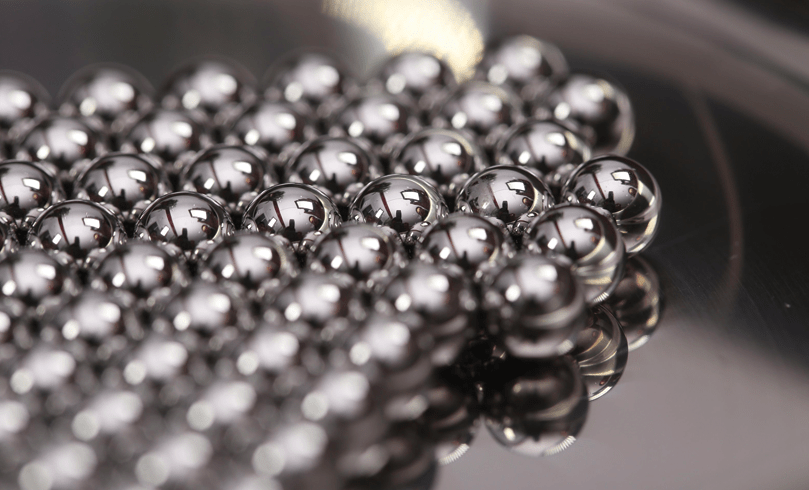
Choosing the right precision ball is about much more than selecting a diameter and material. The grade of a ball determines how tightly its size, roundness, surface finish, and consistency are controlled. For engineers, manufacturers, and buyers working with demanding components, understanding these grades can make a major difference in performance. Abbott Ball provides precision ball solutions, including high precision balls, for applications where dimensional accuracy, consistency, and dependable quality are essential.
What Are Precision Ball Grades?
Before choosing a grade, it helps to understand exactly what the number represents. A ball grade is a standardized classification that describes how closely a manufactured ball meets specific dimensional and geometric requirements. In general, a lower grade number means a tighter tolerance and a more precise ball.
For example, Grade 3 is more precise than Grade 10, while Grade 10 is more precise than Grade 25 or Grade 50. These classifications help manufacturers and engineers communicate the level of accuracy required for a particular application.
A grade can relate to several characteristics, including:
- Diameter variation: How much the diameter can vary on an individual ball.
- Spherical form: How closely the ball approaches a perfect sphere.
- Lot consistency: How closely balls within the same lot match one another.
- Surface finish: How smooth the ball surface must be.
These characteristics work together to determine whether a ball is suitable for a demanding bearing, valve, instrument, or other precision assembly.
How Does the Precision Ball Grade Scale Work?
Understanding the scale makes it easier to compare different options. Precision ball grades commonly include Grade 3, Grade 5, Grade 10, Grade 25, and Grade 50, with lower numbers representing increasingly tight tolerances. Abbott’s published precision ball specifications list Grades 3 through 50, while its semi-precision range begins at higher grade numbers.
Here is a simple way to think about the hierarchy:
- Grade 3: Extremely tight precision for highly demanding applications.
- Grade 5: Very high precision where exceptional consistency is required.
- Grade 10: High precision commonly associated with demanding bearing and industrial applications.
- Grade 25: Precision suitable for many general industrial applications.
- Grade 50: A less restrictive precision level for applications where extreme accuracy is not necessary.
The exact tolerances should always be checked against the applicable specification or standard rather than relying only on the grade number.
Why Does Ball Grade Matter in Precision Applications?
The grade of a ball can influence how smoothly and consistently a mechanical assembly operates. A ball with tighter dimensional control can help maintain more consistent contact with mating surfaces, while improved spherical accuracy can support predictable movement and load distribution.
This is particularly important when using precision ball bearings, where the rolling elements need to work together with the bearing races. Ball diameter variation, spherical deviation, and surface finish can influence factors such as vibration, friction, noise, and wear. Industry references identify lower-numbered grades as more precise and associate tighter tolerances with improved bearing performance.
Applications that may require tighter grades include:
- High-speed bearing systems
- Precision instruments
- Aerospace components
- Machine tool systems
- Robotics and automation
- Medical and scientific equipment
However, selecting the most precise grade available is not automatically the best engineering decision. The grade should match the actual requirements of the assembly.
Grade 3 vs. Grade 5 vs. Grade 10: What Is the Difference?
The differences between the grades become important when an application has demanding dimensional requirements. Under ISO 3290 references, Grade 3 allows tighter limits than Grade 5, while Grade 5 is tighter than Grade 10. For example, published ISO-based data lists spherical deviation values of approximately 0.08 µm for Grade 3, 0.13 µm for Grade 5, and 0.25 µm for Grade 10.
That means a lower number represents a smaller permitted deviation from the ideal geometry.
Grade 3 is generally considered an ultra-precision option where extremely tight control is necessary.
Grade 5 provides very high precision for demanding mechanical and measurement applications.
Grade 10 offers high precision and is commonly suitable for many advanced bearing and industrial requirements.
The best choice depends on the complete application specification, not simply on choosing the smallest grade number.
How Do You Choose the Right Precision Ball Grade?
Selecting the correct grade begins with understanding what the ball needs to accomplish. Instead of automatically choosing the highest precision, evaluate the operating requirements of the complete assembly.
Consider these factors:
Application accuracy: Determine how much dimensional variation the finished assembly can tolerate.
Operating speed: Higher-speed systems may require tighter control of geometry and surface finish to reduce vibration and unwanted mechanical effects.
Load requirements: Consider radial and axial loads, contact stresses, and expected operating conditions.
Surface finish: A smoother ball may be necessary where friction, lubrication, wear, or sealing performance is critical.
Mating components: The ball grade must work with the tolerances of the race, socket, valve seat, or other mating component.
Applicable standard: Confirm whether the specification follows ABMA, ISO 3290, or another recognized standard.
The right grade is therefore the one that meets the functional requirements of the application without specifying unnecessary precision.
What Should You Include When Requesting Precision Balls?
A clear specification helps prevent confusion during sourcing and production. When requesting a precision ball, provide as much technical information as possible.
Useful details include:
- Material
- Nominal diameter
- Required grade
- Applicable standard
- Quantity
- Surface finish requirements
- Operating environment
- Application details
- Drawing or technical specification
For engineers who are still determining the appropriate specification, sharing the application requirements can make it easier to identify a suitable grade.
Request a Precision Ball Quote:
Get a Precision Ball Quote
Understanding High Precision Ball Bearings
When extremely consistent rolling performance is required, high precision ball bearings depend on carefully controlled ball geometry and dimensional consistency. The ball is only one part of the complete bearing system, but its accuracy can have a direct effect on how the assembly performs.
A bearing designed for high-speed rotation, low vibration, or precise movement may require a tighter ball grade than a general-purpose mechanical assembly. This is why engineers should evaluate the ball, raceways, preload, lubrication, operating speed, and load conditions together rather than selecting a grade in isolation.
The goal is predictable performance across the entire assembly.
How Does the Abbott Ball Company Approach Ball Grade Selection?
When evaluating a supplier, buyers should look beyond the grade printed on a quotation. The specification should clearly identify the applicable standard and the tolerances associated with the selected grade.
The the Abbott ball company reference is relevant when discussing precision ball sourcing because standardized grades provide a common technical language between manufacturers and buyers. Abbott’s published information states that its precision and semi-precision balls conform to ABMA and ISO 3290 requirements, helping customers specify balls according to recognized tolerance classifications.
A strong sourcing process should confirm:
- The specified grade and standard
- Ball material and diameter
- Required tolerances
- Surface requirements
- Inspection or quality documentation
- Application-specific requirements
This approach helps ensure the selected ball meets the actual engineering specification rather than simply matching a grade number.
Conclusion
Understanding precision ball grades makes it easier to select components that support reliable, repeatable performance. Lower grade numbers generally indicate tighter tolerances, but the most precise option is not always necessary. The best selection considers the application’s speed, load, dimensional requirements, surface finish, mating components, and applicable standard. Abbott Ball can help you evaluate these requirements and identify a precision ball solution suited to your application. Contact us to discuss your requirements, specifications, and precision ball needs.
Frequently Asked Questions
What does ball grade mean?
Ball grade is a classification used to define the precision level of a ball. It can cover characteristics such as diameter variation, spherical form, lot consistency, and surface roughness.
Is a lower ball grade more precise?
Yes. In commonly used precision ball grading systems, a lower numerical grade represents tighter tolerances. Therefore, Grade 10 is more precise than Grade 100.
What is ABMA Standard 10?
ABMA Standard 10 is a recognized standard used to define precision requirements for metal balls, including characteristics such as spherical form, diameter variation, and other dimensional requirements.
What is ISO 3290?
ISO 3290 is an international standard covering finished balls for rolling bearings and defines precision classifications and associated dimensional and geometric requirements.
What is the difference between Grade 10, Grade 100, and Grade 1000?
Grade 10 has substantially tighter precision requirements than Grade 100, while Grade 1000 allows greater dimensional and geometric variation. The appropriate choice depends on the application and its tolerance requirements.
How are precision ball grades measured?
Precision balls can be evaluated for dimensional variation, spherical deviation, surface roughness, and lot consistency using specialized inspection and measurement equipment. The specific inspection method depends on the characteristic and applicable standard.