
Gold, Platinum & Tantalum Balls: Precious and Exotic Metal Options Explained

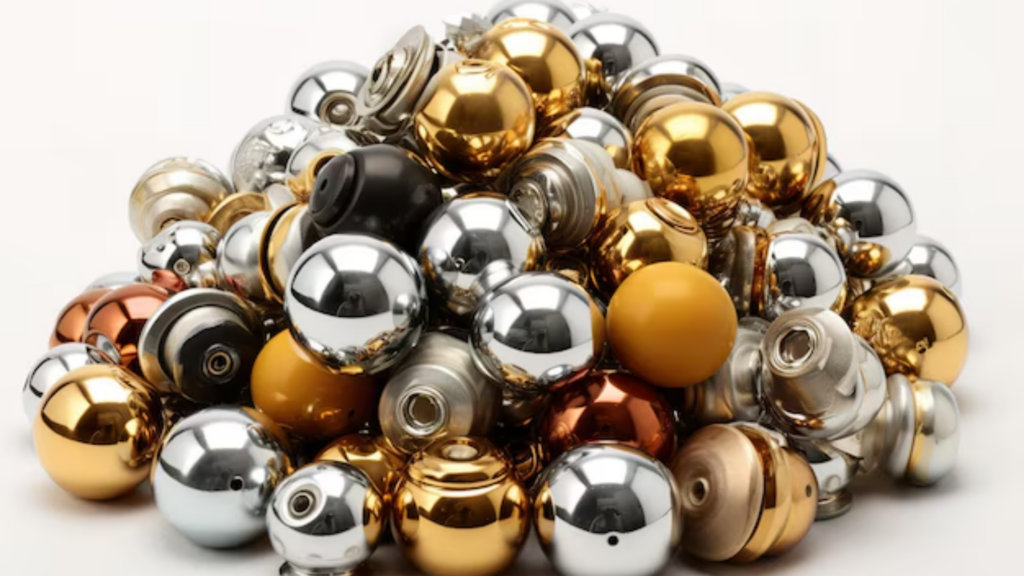
When an application requires more than conventional materials can provide, Gold, Platinum & Tantalum Balls offer specialized solutions for demanding environments. These materials combine unique properties such as corrosion resistance, electrical conductivity, chemical stability, biocompatibility, and resistance to extreme temperatures. Abbott Ball provides precision ball solutions in specialty materials for industries that require carefully controlled dimensions, surface finishes, and material characteristics. Understanding how gold, platinum, and tantalum differ can help engineers, manufacturers, and purchasing teams select the right ball material for their application.
What Are Gold, Platinum, and Tantalum Balls?
These specialty balls are spherical components manufactured from precious or exotic metals for applications where standard steel or ceramic materials may not provide the required performance.
While all three materials can be manufactured into precision spheres, they serve different engineering purposes. Gold is valued for conductivity and corrosion resistance, platinum is known for chemical stability and high-temperature performance, and tantalum is especially useful in highly corrosive environments.
The right choice depends on several factors:
- Operating temperature
- Chemical exposure
- Electrical requirements
- Corrosion resistance
- Biocompatibility
- Required diameter and tolerance
- Surface finish
- Mechanical loading
- Application environment
Precision is equally important. A material with excellent chemical or electrical properties may still fail to perform properly if the finished sphere does not meet the required dimensional and surface specifications.
Why Are Specialty Metal Balls Used?
Specialty metal balls are selected when the application requires characteristics that ordinary materials cannot reliably provide.
In demanding environments, engineers may need a sphere that maintains its properties while exposed to chemicals, heat, moisture, electrical current, or biological environments. Precious and exotic metals can provide those specialized characteristics.
For example, gold is highly resistant to oxidation and offers excellent electrical conductivity. Platinum provides exceptional resistance to oxidation and many corrosive environments while maintaining performance at elevated temperatures. Tantalum is particularly recognized for its resistance to aggressive chemical environments.
This makes specialty metal balls useful in industries such as:
- Electronics and electrical contacts
- Medical devices
- Jewelry and body jewelry
- Aerospace
- Chemical processing
- Laboratory equipment
- Specialty valves
- Scientific instruments
- Semiconductor applications
- High-performance engineering systems
The material should therefore be selected based on the complete operating environment rather than simply its appearance or material value.
What Makes Gold Balls Different?
Gold balls combine the distinctive characteristics of gold with the dimensional control required for spherical components.
Gold is naturally resistant to corrosion and oxidation and is an excellent electrical conductor. These characteristics make it useful when a component must maintain reliable electrical performance while resisting environmental degradation.
Gold balls can also provide an attractive, highly polished appearance, making them suitable for specialized jewelry applications. Gold spheres are available in different karats and compositions depending on the intended use. Abbott’s published material information, for example, lists 14K and 18K yellow gold options as well as other configurations available for specific requirements.
Gold may be appropriate when an application requires:
- Excellent electrical conductivity
- Resistance to oxidation
- Corrosion resistance
- High visual quality
- Specialized medical marker applications
- Jewelry or body jewelry applications
The choice of gold purity or alloy is important because composition can influence hardness, durability, appearance, and application suitability.
What Are Platinum Balls Used For?
Platinum is one of the most valuable specialty metals for applications requiring chemical stability, high-temperature resistance, and reliable electrical performance.
Platinum balls are particularly useful in electrical and electronic contact applications. Their smooth and uniform surfaces can help support reliable contact performance. Platinum also has a very high melting point and strong resistance to oxidation, making it valuable in demanding environments.
Common applications include:
- Electrical contacts
- Electronic components
- Specialty jewelry
- High-temperature environments
- Chemical applications
- Specialized laboratory equipment
Platinum can also be alloyed with other metals to modify its mechanical characteristics. Depending on the application, platinum alloys may provide a useful balance between durability and the inherent chemical stability of platinum.
For applications involving electrical contacts, surface condition becomes particularly important. Pits, scratches, or other imperfections can affect contact reliability, which is why precision manufacturing and finishing are essential.
Why Is Tantalum Considered an Exotic Metal Option?
Tantalum is different from gold and platinum because its major advantage is its exceptional resistance to aggressive chemical environments.
The metal is highly resistant to corrosion and is known for its chemical stability. These characteristics make tantalum attractive for specialized industrial, medical, chemical, and scientific applications.
Tantalum balls can be supplied in different grades and sizes depending on the manufacturing requirement. Published specifications from Abbott include tantalum ball sizes from approximately 0.008 inches to 0.125 inches and grades including 50, 100, and 200.
Tantalum can be considered when an application requires:
- Exceptional corrosion resistance
- High chemical stability
- Nonmagnetic behavior
- Specialized medical applications
- Resistance to aggressive chemicals
- High-temperature capability
The material is also valued in applications where maintaining material integrity in challenging environments is more important than using a conventional bearing material.
How Do Gold, Platinum, and Tantalum Compare?
Each metal offers a different combination of performance characteristics. The best material depends on what the ball must accomplish inside the final assembly.
| Property | Gold | Platinum | Tantalum |
|---|---|---|---|
| Corrosion resistance | Excellent | Excellent | Exceptional |
| Electrical conductivity | Excellent | Good | Lower than gold |
| High-temperature capability | Moderate | Excellent | Excellent |
| Chemical resistance | Excellent | Excellent | Exceptional |
| Appearance | Distinctive yellow or alloy-dependent | Bright metallic | Gray metallic |
| Common specialty uses | Jewelry, electronics, medical | Electrical contacts, jewelry | Chemical, medical, specialty engineering |
| Magnetic behavior | Nonmagnetic | Nonmagnetic | Nonmagnetic |
This comparison illustrates why material selection should be application-driven. A component intended for electrical conductivity may benefit from gold, while an application exposed to extreme chemical conditions may favor tantalum.
How Do Precision Metal Balls Differ From Standard Balls?
The material is only one part of a precision sphere specification. Dimensional accuracy, sphericity, surface finish, and consistency can have an equally important impact on performance.
Precision metal balls are manufactured to controlled grades and tolerances. Precision ball grades generally define how closely the ball approaches a perfect sphere and how consistently its diameter is controlled. Lower grade numbers indicate tighter precision requirements.
For example, precision ball specifications can include:
- Nominal diameter
- Diameter variation
- Sphericity
- Surface roughness
- Lot diameter variation
- Material composition
- Hardness where applicable
- Inspection requirements
These specifications become especially important in bearings, valves, instrumentation, and other systems where small dimensional variations can affect performance.
Are Gold, Platinum, and Tantalum Balls Used in Bearings?
They can be used in specialized bearing or component applications, but they are not automatically the preferred choice for conventional bearing systems.
Traditional precision ball bearings frequently use materials such as bearing steel, stainless steel, ceramic, or other engineered materials because these materials can offer an appropriate combination of hardness, wear resistance, load capacity, and dimensional stability.
Gold, platinum, and tantalum are generally selected when their unique material properties provide a specific advantage.
For example, an application involving corrosive chemicals may prioritize chemical resistance over conventional bearing hardness. An electrical contact application may prioritize conductivity and oxidation resistance. A medical application may place greater emphasis on material compatibility and surface condition.
The application requirements should therefore determine whether a specialty metal is appropriate.
How Do They Compare With Precision Steel Balls?
Precision steel balls remain one of the most widely used options for demanding mechanical applications because steel provides a strong combination of hardness, wear resistance, dimensional stability, and manufacturing availability.
Common precision steel materials include stainless steels, chrome steel, and specialized bearing steels.
Compared with specialty precious metals, steel can be advantageous when the primary requirements involve:
- High mechanical strength
- Wear resistance
- Bearing performance
- Dimensional consistency
- High load capacity
- Cost-effective production
However, steel may not be the best choice when corrosion, chemical exposure, electrical conductivity, or other environmental requirements dominate.
For applications requiring extremely controlled dimensions, high precision steel balls can provide tight tolerances and consistent spherical geometry. Precision ball manufacturers can also help determine whether steel or a specialty metal is better suited to a particular operating environment.
What Role Does Surface Finish Play?
Surface finish can directly influence friction, wear, vibration, sealing, and contact behavior.
A highly precise ball is not simply a sphere with a controlled diameter. Its surface must also meet the requirements of the application. Even microscopic imperfections can affect how the ball interacts with a bearing race, valve seat, electrical contact, or other mating component.
For bearing applications, smoother surfaces can reduce friction and vibration. In valve applications, surface condition can influence sealing. In jewelry, a clean and uniform finish can affect appearance.
Precision ball production may therefore involve multiple stages of forming, grinding, lapping, finishing, and inspection. Manufacturing processes can be adapted according to the material and required specifications.
How Are Specialty Metal Balls Manufactured?
Manufacturing processes vary according to the material, diameter, grade, and application requirements.
The objective is to transform the raw material into a sphere that meets defined dimensional and surface specifications.
A typical precision manufacturing workflow may include:
- Material preparation: The appropriate metal or alloy is selected based on the application.
- Forming: Material is shaped into a spherical form.
- Deflashing or initial finishing: Manufacturing irregularities are removed.
- Grinding: The diameter and spherical geometry are progressively improved.
- Lapping: Fine dimensional and surface corrections are made.
- Final finishing: The surface is refined to the specified condition.
- Inspection: Balls are measured for dimensional accuracy, sphericity, and surface requirements.
For specialty materials, cleaning and handling can also become critical. Medical and sensitive applications may require additional controls to reduce contamination and maintain material traceability.
How Should You Choose the Right Specialty Ball?
Choosing the right material starts with understanding the application rather than starting with a specific metal.
Consider these questions before selecting a ball:
- What diameter is required?
- What tolerance is acceptable?
- What grade is needed?
- Will the ball contact chemicals?
- What operating temperature will it experience?
- Is electrical conductivity important?
- Is corrosion resistance critical?
- Will it experience mechanical loading?
- Does the application require a specific surface finish?
- Is biocompatibility required?
- Are material certifications or traceability necessary?
The answers can quickly narrow the selection.
For example, gold may be attractive for conductivity and corrosion resistance, platinum for high-temperature and electrical applications, and tantalum for severe chemical environments. Steel may remain the better choice when mechanical performance and wear resistance are the primary concerns.
Why Precision Ball Manufacturing Standards Matter
Consistency is essential when hundreds or thousands of balls must operate together.
Precision ball standards help define measurable characteristics such as diameter variation and spherical form. ISO 3290 and ABMA-related specifications are commonly referenced when determining precision ball grades. Abbott’s precision ball information, for example, identifies grades from 3 through 50 and explains how sphericity, surface integrity, and diameter influence performance.
Lower-numbered grades generally represent tighter dimensional requirements.
A precision ball manufacturer should therefore be evaluated based on more than material availability. Important considerations include:
- Quality control capabilities
- Material traceability
- Inspection procedures
- Available grades
- Size range
- Surface finishing capabilities
- Custom manufacturing support
- Documentation and certification
These factors help ensure that the finished component matches the engineering specification.
What Industries Use Precious and Exotic Metal Balls?
The applications for these specialty spheres extend across multiple industries because each material offers a unique performance advantage.
Electronics
Gold and platinum can be used in specialized electrical contact applications where conductivity, reliability, and resistance to oxidation matter.
Medical Technology
Specialty metal spheres can be used in medical and diagnostic applications where material properties, cleanliness, and dimensional accuracy are important.
Jewelry
Gold and platinum balls are used in jewelry and body jewelry where appearance, surface quality, and material characteristics matter.
Chemical Processing
Tantalum can be particularly valuable in aggressive chemical environments because of its exceptional corrosion resistance.
Aerospace and Defense
Precision spheres are used in demanding aerospace and defense applications where controlled geometry and consistent performance are essential. Precision balls are used in aerospace bearings, guidance systems, valves, and other critical applications.
When Should You Choose Specialty Metal Balls Over Steel?
Specialty metals should be considered when the application requires properties that conventional steel cannot adequately provide.
Steel is often the logical starting point for mechanical applications, but gold, platinum, and tantalum can become attractive when the environment introduces additional challenges.
A simple decision framework is:
Choose gold when conductivity, corrosion resistance, or specialized jewelry and medical applications are priorities.
Choose platinum when electrical contact reliability, chemical stability, or high-temperature performance is important.
Choose tantalum when extreme chemical resistance and material stability are key requirements.
Choose steel when mechanical strength, hardness, wear resistance, and conventional bearing performance are the primary goals.
The best material is the one that satisfies the complete engineering specification rather than simply offering the most advanced material properties.
Final Thoughts on Gold, Platinum, and Tantalum Balls
Gold, platinum, and tantalum each provide a distinctive combination of properties that can solve specialized engineering challenges. Gold stands out for conductivity and corrosion resistance, platinum offers excellent chemical stability and high-temperature performance, while tantalum is particularly valuable for severe corrosive environments. Selecting between these materials requires careful consideration of diameter, tolerance, sphericity, surface finish, operating conditions, and application requirements. Abbott Ball offers specialty ball materials and precision manufacturing capabilities to support demanding applications across industries. Contact us today to discuss your material, size, grade, and precision requirements and determine the right ball solution for your application.
Frequently Asked Questions
What does a precision ball grade mean?
A precision ball grade indicates the allowable level of dimensional and spherical variation. Lower grade numbers generally represent tighter tolerances and higher precision.
Why is sphericity important in precision balls?
Sphericity determines how closely a ball approaches a perfect sphere. Better sphericity supports more consistent contact, load distribution, and rotation in precision applications.
What is the difference between precision and semi precision balls?
Precision balls generally have tighter tolerances and are designed for more demanding applications. Semi-precision balls have less stringent dimensional requirements and are commonly used where extreme accuracy is not necessary.
How does surface finish affect ball performance?
A smoother surface can reduce friction, wear, and vibration. Surface finish can also be important for applications involving sealing or direct surface-to-surface contact.
Are lower grade numbers more precise?
Yes. In common precision ball grading systems, a lower numerical grade represents a tighter level of precision. For example, Grade 5 is more precise than Grade 100.
What information should be provided when ordering precision balls?
Important specifications can include material, diameter, grade, quantity, surface finish, hardness where applicable, application conditions, and documentation requirements. Providing a drawing or existing part specification can also help with selection.