
How Do You Specify a Drilled Ball? A Complete Guide to Hole Size, Location, Material and Tolerance
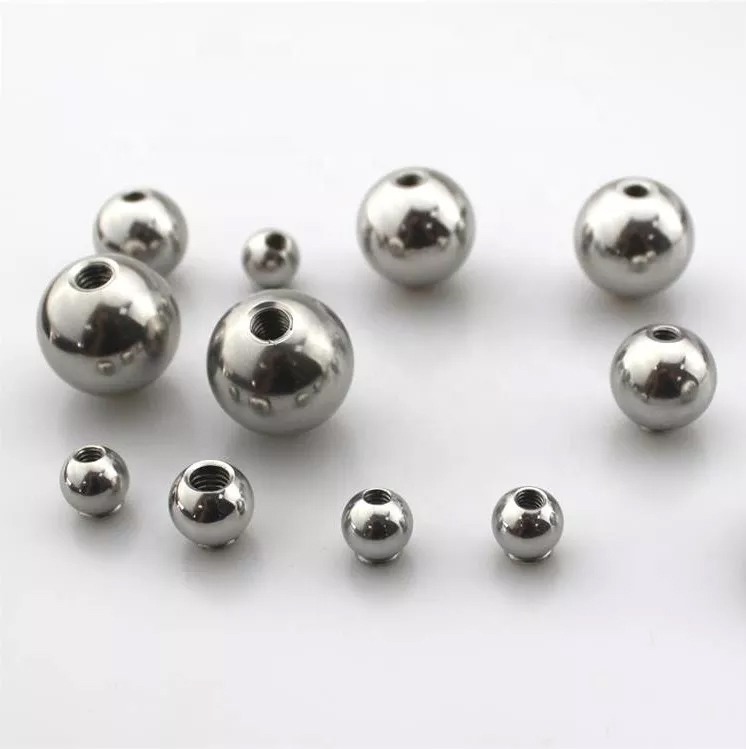
Specifying a drilled ball requires more than simply choosing a ball diameter and asking for a hole. The hole’s size, position, depth, geometry, material, and dimensional tolerances can all influence how the finished component performs. Whether the ball is used for alignment, mounting, fluid control, instrumentation, or a specialized mechanical assembly, clear specifications help ensure the finished component matches the application’s requirements. Abbott Ball supplies precision ball solutions for applications where accurate drilling and consistent manufacturing are important.
What Is a Drilled Ball?
Before creating a specification, it is useful to understand what makes a drilled ball different from a standard solid ball. A drilled ball is a spherical component manufactured with one or more precisely formed holes or openings through its surface.
The drilling process can be applied to different ball materials and configurations depending on the intended application. The hole can be designed to serve several purposes, including fastening, alignment, positioning, fluid passage, or integration with another component.
Common considerations include:
- Ball diameter and material
- Hole diameter and depth
- Hole location and orientation
- Number of holes
- Hole-to-ball concentricity
- Dimensional and geometric tolerances
Each specification contributes to the final functionality of the component.
Why Does Hole Size Matter?
Hole diameter is one of the first specifications that should be established because it determines how the drilled ball interacts with another component. Even a small variation can affect fit, movement, fastening, or fluid flow.
The required hole size should be based on the component that will pass through or interact with the opening. For example, a clearance hole may require a different tolerance than a threaded or press-fit hole.
When specifying the opening, identify:
- Nominal hole diameter
- Permitted diameter tolerance
- Hole depth, when it does not pass completely through
- Required hole finish
- Whether the hole needs to be threaded, countersunk, or otherwise modified
Avoid specifying only a nominal diameter when the application requires a controlled fit. The acceptable variation should be clearly stated on the drawing or purchase specification.
How Do You Specify Hole Location?
Hole location is just as important as hole diameter. A correctly sized hole can still cause assembly problems if it is positioned incorrectly on the spherical surface.
For a single drilled opening, location may be specified relative to a defined axis, centerline, or reference surface. For multiple holes, the angular relationship between the holes should also be clearly documented.
The specification should identify:
- Hole center location
- Angular orientation
- Reference axis or datum
- Relationship between multiple holes
- Required positional tolerance
For demanding applications, positional accuracy can be particularly important because even a small deviation may affect alignment with another component.
What Materials Can Be Used for Drilled Balls?
Material selection should be based on the environment in which the ball will operate. Different materials offer different combinations of strength, corrosion resistance, hardness, wear resistance, density, and machinability.
Common choices may include stainless steel, carbon steel, chrome steel, aluminum, brass, and other specialty materials.
Drilled stainless steel balls are particularly useful when corrosion resistance and durability are important. Depending on the application, different stainless steel grades can provide different combinations of mechanical and environmental performance.
When specifying material, include the exact grade whenever possible rather than simply stating “steel” or “stainless steel.” This helps eliminate ambiguity during manufacturing and purchasing.
What About Pre Drilled Solid Steel Balls?
Some applications require a solid steel ball with a hole machined into it rather than a hollow or fabricated spherical component. These pre drilled solid steel balls can provide a practical solution when a specific hole configuration is needed while retaining the strength and characteristics of a solid ball.
The specification should distinguish between a drilled solid ball and other ball constructions. It should also identify the base material, finished diameter, hole configuration, and applicable tolerances.
This is especially important when the ball will be incorporated into an assembly where both the external spherical surface and internal hole must meet specific dimensional requirements.
How Should Hole Tolerance Be Specified?
Tolerance determines how much a manufactured dimension can vary from its nominal value. For a drilled ball, tolerance may apply to the ball diameter, hole diameter, hole position, hole depth, and other characteristics.
A tighter tolerance may be necessary when the ball must fit precisely with another component. However, unnecessarily tight tolerances can make manufacturing more demanding without providing a functional benefit.
When determining tolerances, consider:
- Required assembly fit
- Operating temperature
- Expected mechanical loads
- Manufacturing process
- Mating component tolerances
- Functional consequences of dimensional variation
The goal is to establish tolerances based on actual performance requirements rather than automatically selecting the tightest possible specification.
Why Do Drilled Balls Matter in Custom Mechanical Design?
Drilled balls can provide designers with additional flexibility when developing specialized mechanical assemblies. A precisely located hole can allow a spherical component to connect, align, rotate, transfer movement, or interact with another part in ways that a standard ball cannot.
For a closer look at the engineering role of drilled steel balls, explore Why Drilled Steel Balls Matter in Custom Mechanical Design.
The right design depends on how the ball will function within the complete assembly. Hole placement, material selection, spherical accuracy, and surface requirements should therefore be considered together.
What Information Should Be Included on a Drilled Ball Drawing?
A detailed technical drawing is one of the most effective ways to communicate requirements to a manufacturer. It provides a single reference for dimensions, tolerances, materials, and geometric relationships.
A typical drawing may include:
- Finished ball diameter
- Ball material and grade
- Hole diameter
- Hole depth
- Hole location
- Angular orientation
- Dimensional tolerances
- Surface finish
- Quantity and inspection requirements
If the ball has multiple holes or complex geometry, a sectional or dimensional view can help clarify the intended configuration.
How Do You Choose the Right Drilled Ball Specification?
The correct specification begins with the function of the finished component. Instead of starting with the manufacturing process, begin by determining what the ball needs to accomplish.
Consider the operating environment, loads, temperature, corrosion exposure, mating components, and required precision. Then determine the material and dimensions that satisfy those requirements.
It is also useful to distinguish between critical and non-critical dimensions. Not every characteristic needs an extremely tight tolerance. Identifying functional requirements can help create a practical and precise specification.
What Is the Role of The Abbott Ball Company?
When sourcing a custom component, clear communication between the engineering team and supplier is essential. Specifications should describe the finished part rather than relying on informal descriptions that could have multiple interpretations.
The Abbott Ball Company has experience with precision ball manufacturing and customized ball configurations. When discussing a drilled ball requirement, providing a drawing, material specification, hole dimensions, and application information can help the supplier understand the intended component and manufacturing requirements.
A complete specification can help address questions before production begins and reduce the possibility of misunderstandings.
Conclusion
A well-defined drilled ball specification should clearly communicate the ball diameter, material, hole size, hole location, depth, orientation, and applicable tolerances. These details help ensure the finished component performs as intended and fits correctly within the larger assembly. The right specification should balance precision with the actual functional requirements of the application rather than automatically selecting the tightest possible tolerances. Abbott Ball can help evaluate your requirements and develop a suitable precision ball solution. Contact us to discuss your drilled ball specifications, material requirements, and custom application.
Frequently Asked Questions
Can you drill a hole in a steel ball?
Yes. Steel balls can be drilled or machined for applications requiring a specific opening, although the appropriate process depends on the ball material, hardness, size, hole geometry, and required accuracy.
Can you drill stainless steel balls?
Yes. Stainless steel balls can be drilled, but the machining method and tooling should be selected according to the specific stainless steel grade and required hole characteristics.
What are drilled steel balls used for?
Drilled steel balls can be used in mechanical assemblies, positioning systems, fluid-control components, instrumentation, fastening applications, and specialized engineering designs.
How do you drill a hole in a ball bearing?
Drilling a bearing ball requires appropriate fixturing and machining techniques because maintaining the spherical surface and accurately positioning the hole can be challenging. The process depends on the ball material, hardness, dimensions, and required specifications.
What is a hollow ball?
A hollow ball is a spherical component with an internal cavity, while a drilled solid ball generally starts as a solid sphere and has one or more holes machined into it. The two constructions can serve different engineering purposes.