
Tungsten Carbide vs. Steel Balls: Which Material Is Better for Wear, Density and Harsh Applications?
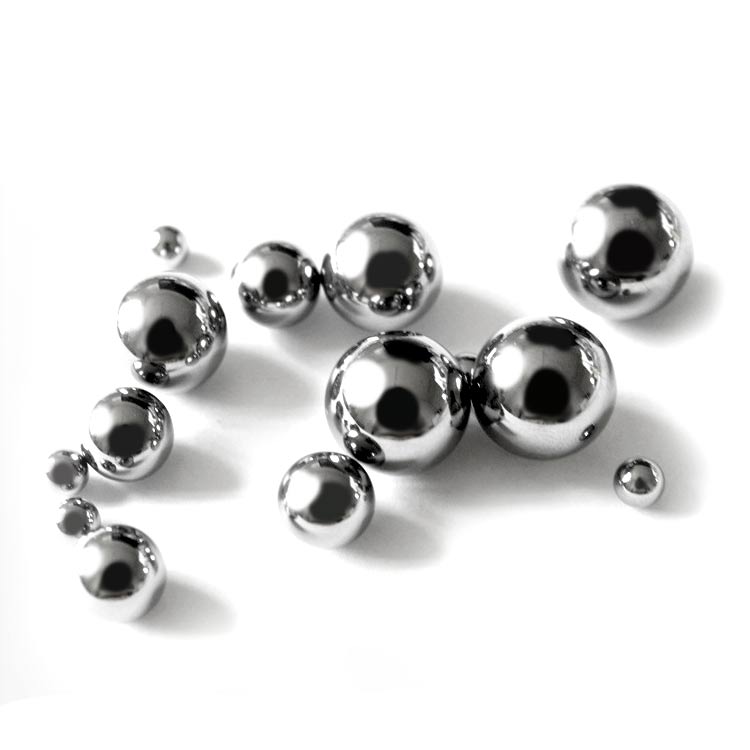
Choosing the right ball material can have a major effect on the reliability and performance of an industrial component. When comparing tungsten carbide vs. steel balls, engineers typically consider hardness, wear resistance, density, corrosion exposure, operating temperature, and load conditions. Abbott Ball supplies specialized ball materials for demanding applications where selecting the right combination of material properties is essential.
Why Material Selection Matters for Industrial Balls
Before comparing individual properties, it is important to understand why ball material can influence an application’s overall performance. Balls may operate under continuous contact, high pressure, abrasive conditions, repeated motion, or exposure to challenging environments.
A material that performs well in a standard bearing may not be the right choice for an abrasive valve, flow meter, pump, or high-load mechanism.
The material should therefore be selected according to the application’s actual operating conditions.
- Wear: Determines how well the ball maintains its surface and dimensions during repeated contact.
- Density: Influences the weight and momentum of the ball.
- Hardness: Helps determine resistance to indentation, deformation, and abrasive damage.
- Corrosion resistance: Becomes important when moisture, chemicals, or aggressive media are present.
- Temperature performance: Matters when the ball must operate in elevated-temperature environments.
Tungsten Carbide vs. Steel Balls: Key Material Differences
The most important distinction between these materials is the combination of hardness, density, and wear resistance they provide. Tungsten carbide is considerably harder and denser than conventional steel, making it attractive for severe-duty applications.
Typical tungsten carbide ball specifications can show a density around 15 g/cm³ and hardness around 90 to 92 HRA, although properties vary by grade and binder composition. By comparison, common bearing steel is substantially less dense and generally has lower hardness than tungsten carbide.
This difference becomes particularly noticeable when balls are exposed to abrasive contact or high mechanical stresses.
Steel remains an excellent choice for many conventional applications because it combines strength, toughness, availability, and proven bearing performance. Tungsten carbide is generally selected when ordinary steel does not provide enough wear resistance or dimensional stability.
Which Material Offers Better Wear Resistance?
Wear resistance is one of the strongest reasons engineers consider tungsten carbide. Its extremely hard structure allows the ball to resist surface damage and dimensional changes during severe contact.
This makes tungsten carbide balls suitable for applications where abrasive wear can quickly reduce the useful life of conventional balls. Typical applications include valves, pumps, flow meters, gauges, ball screws, and demanding bearing systems.
Steel balls can still provide excellent wear performance, especially hardened bearing steels such as 52100 chrome steel. For many general-purpose bearing and mechanical applications, steel offers a highly practical combination of hardness and toughness.
However, when abrasive conditions are severe, carbide can provide a significant advantage.
How Does Density Affect Performance?
Density is another major difference between the two materials. Tungsten carbide is much denser than steel, with typical carbide grades approaching 15 g/cm³. This means a tungsten carbide ball of the same diameter weighs considerably more than a steel ball.
Higher density can be beneficial when an application requires greater mass in a compact space.
This can be useful for:
- Compact weighted components
- Specialized valves
- High-mass moving elements
- Applications requiring increased momentum
- Designs where available space is limited
However, additional weight is not automatically beneficial. In high-speed systems, the increased mass may affect dynamic behavior, acceleration, and bearing loads. Engineers should evaluate density as part of the complete mechanical design.
When Is Steel the Better Choice?
Steel remains one of the most widely used materials for precision and industrial balls because it provides a balanced combination of mechanical properties. Hardened chrome steel, for example, is widely used in bearings and other precision applications.
For engineers evaluating steel ball manufacturers, the important consideration is not simply the material name. The specific steel grade, heat treatment, dimensional tolerance, surface finish, and manufacturing quality can all influence performance.
Steel may be the better choice when:
- The application has moderate wear requirements.
- Conventional bearing performance is sufficient.
- Lower density is desirable.
- High toughness is important.
- The operating environment does not require extreme carbide-level wear resistance.
For applications requiring corrosion resistance, stainless steel may be more appropriate than conventional carbon or chrome steel.
What About Stainless Steel Balls?
Stainless steel provides another option when environmental resistance is important. Different stainless grades offer different combinations of hardness, corrosion resistance, and mechanical performance.
For example, hardened stainless grades can be used in applications involving moisture or corrosive exposure while maintaining useful mechanical strength. Buyers searching for stainless steel balls for sale should identify the exact stainless grade rather than treating all stainless steel balls as equivalent.
The appropriate grade depends on the environment, load, required hardness, and dimensional requirements.
Stainless steel can therefore occupy an important middle ground between conventional steel and more specialized materials.
When Should You Choose Tungsten Carbide?
Tungsten carbide becomes especially attractive when the ball must maintain its shape and surface condition under severe operating conditions. Its combination of high hardness, wear resistance, compressive strength, and density makes it particularly useful for specialized applications.
Consider tungsten carbide when the application involves:
- Severe abrasive wear
- High contact pressure
- Repeated mechanical contact
- Demanding valve applications
- Precision gauging
- Flow measurement
- Ball screws
- Specialized bearing systems
Tungsten carbide is not automatically the best material for every application. Its higher density and different mechanical behavior should be considered alongside the benefits of extreme hardness and wear resistance.
Learn More Before Choosing a Material
If you are comparing carbide materials for a specialized application, this resource can help you understand another important material distinction:
Tungsten Alloy vs. Tungsten Carbide Balls: Which One Does Your Application Need?
Tungsten Carbide Ball Bearings for Demanding Applications
Bearing applications can place particularly demanding requirements on ball materials. Tungsten carbide ball bearings can be considered where extreme hardness, wear resistance, and dimensional stability are more important than the lighter weight of conventional steel.
Carbide balls are used in precision bearings and other components where resistance to deformation and wear can help maintain consistent performance. Their high density and hardness can also make them suitable for specialized environments where steel balls may experience excessive wear.
The complete bearing design still matters. Raceway material, lubrication, preload, speed, load, temperature, and environmental exposure should all be evaluated before selecting carbide balls.
How Do You Choose Between Tungsten Carbide and Steel?
The best material depends on what the ball needs to accomplish. Rather than selecting a material based solely on hardness or density, evaluate the complete operating environment.
A practical selection process includes:
- Identify the primary failure concern: Determine whether wear, corrosion, deformation, weight, or temperature is the main challenge.
- Review operating loads: Consider contact pressure, impact, and repeated loading.
- Check environmental exposure: Account for water, chemicals, abrasive particles, and other contaminants.
- Evaluate speed: Higher speeds can make density and dynamic behavior especially important.
- Specify the required tolerance: Precision applications may require a particular ball grade and surface finish.
- Compare material grades: Tungsten carbide and steel each have multiple grades with different characteristics.
The right choice is ultimately the material that provides the required performance without introducing unnecessary properties that do not benefit the application.
Tungsten Carbide vs. Steel Balls: Final Comparison
The comparison becomes much clearer when the main properties are considered together. Tungsten carbide generally has the advantage in extreme hardness, density, and abrasive wear resistance, while steel offers an established balance of strength, toughness, precision, and versatility.
For severe wear and high-pressure applications, carbide can be the stronger technical choice. For conventional bearing and industrial applications, properly specified steel can provide excellent performance.
The application should always determine the material rather than the other way around.
Conclusion
Choosing between tungsten carbide and steel requires a clear understanding of the application’s operating conditions. Tungsten carbide can deliver exceptional hardness, density, and wear resistance for severe-duty environments, while steel remains a versatile solution for many bearing and industrial applications. Abbott Ball can help you evaluate material options based on your performance requirements, dimensional specifications, and application conditions. Contact us to discuss your requirements and find the right ball material for your application.
Frequently Asked Questions
Are tungsten carbide balls better than steel balls?
Tungsten carbide balls can be better than steel balls when an application requires extreme hardness, wear resistance, or high density. Steel can remain the better option for many conventional bearing and mechanical applications.
How hard are tungsten carbide balls?
Typical tungsten carbide balls can have hardness around 84 to 95 HRA, depending on grade, grain size, binder system, and composition. Specific hardness should be confirmed for the selected material grade.
Are tungsten carbide balls corrosion resistant?
Tungsten carbide provides good resistance in many environments, but it should not be considered universally corrosion-proof. The binder system and operating environment can significantly affect corrosion behavior.
What are tungsten carbide balls used for?
Common applications include bearings, ball screws, check valves, pumps, flow meters, gauging equipment, precision instruments, and pen balls.
Can tungsten carbide balls replace steel balls?
Yes, tungsten carbide balls can replace steel in selected applications where greater hardness, wear resistance, or dimensional stability is needed. However, the application’s loads, speed, environment, and material compatibility should be reviewed first.
What makes tungsten carbide heavier than steel?
Tungsten carbide has a much higher density than conventional steel. Typical carbide ball density is around 15 g/cm³, so a carbide ball of the same diameter weighs substantially more than a steel ball.