
Low Minimum Order Ball Manufacturing: Why Buy Only What You Need

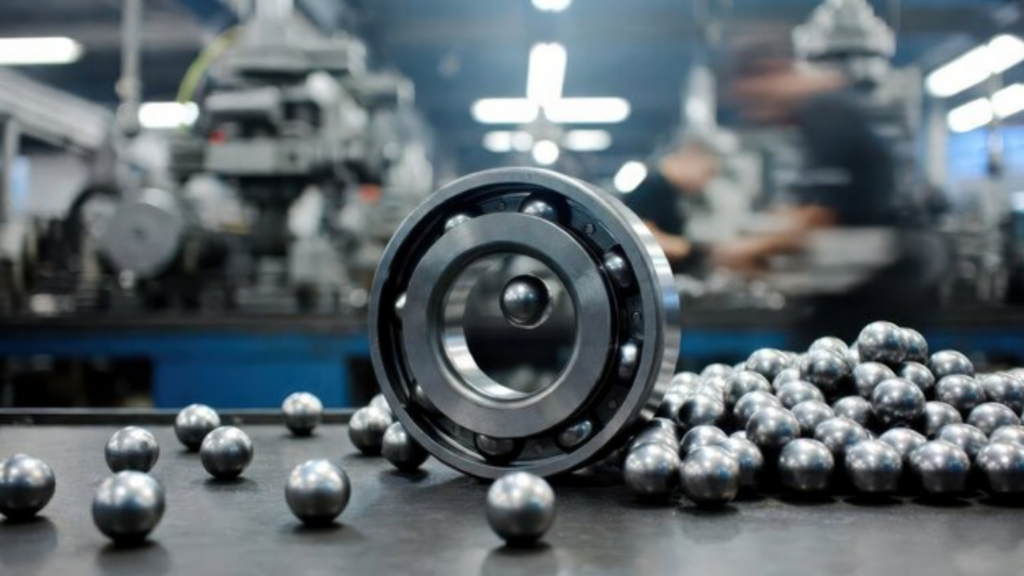
When a project requires highly accurate components, buying more than necessary can create unnecessary inventory and complicate production planning. Abbott Ball provides precision ball solutions for applications where dimensional accuracy, consistency, and reliable performance matter. Choosing low minimum order precision balls allows businesses to purchase closer to their actual requirements while maintaining the specifications needed for demanding applications. This approach can be especially useful for prototypes, specialized equipment, replacement components, product testing, and smaller production runs.
What Are Low Minimum Order Precision Balls?
Low minimum order precision balls are accurately manufactured spherical components available in smaller quantities than traditional high-volume production orders. They are designed for applications that require controlled dimensions, consistent roundness, surface quality, and dependable material properties without forcing the buyer to purchase a large surplus.
For manufacturers, engineers, and product developers, this purchasing model provides greater flexibility. Instead of committing to a large quantity before demand is established, businesses can order a quantity that better matches their immediate production requirements.
This is particularly valuable when specifications are highly specialized or when a component is being evaluated before full-scale production.
Why does order quantity matter?
Order quantity can influence production planning, inventory management, and manufacturing efficiency. Manufacturers may consider several factors when determining an appropriate order quantity, including:
- Ball diameter and tolerance
- Material and grade
- Surface finish requirements
- Application requirements
- Available inventory
- Production complexity
- Inspection and documentation requirements
Industry suppliers commonly evaluate quantity alongside diameter, tolerance class, material, application, and certification requirements when preparing a precision ball quotation.
Why Should You Buy Only the Quantity You Need?
Buying only what a project requires can provide more control over inventory and production decisions. This does not mean ordering fewer components at the expense of performance. Instead, it means aligning the purchase quantity with the actual stage and requirements of the project.
For many applications, excess inventory can remain unused for long periods. That can be especially inconvenient when specifications change, product designs are updated, or a project does not move into full-scale production.
Smaller orders can support better planning
A lower minimum order can make it easier to:
- Test a new component design
- Build engineering prototypes
- Validate a production process
- Support short production runs
- Replace specialized components
- Evaluate different materials or specifications
- Avoid unnecessary stock
- Respond to changing project requirements
The result is a more flexible procurement strategy that can adapt as the project develops.
How Do Low Minimum Orders Help With Prototyping?
Prototyping is one of the strongest use cases for smaller precision ball orders. Engineers may need a limited number of components to test a new mechanism before committing to a larger production quantity.
A prototype can reveal whether the selected diameter, material, tolerance, hardness, or surface finish is suitable for the application. Ordering a smaller quantity first gives the engineering team an opportunity to evaluate performance under actual operating conditions.
What can engineers evaluate during prototyping?
Depending on the application, testing may focus on:
- Dimensional compatibility
- Movement and rotation
- Friction characteristics
- Load performance
- Wear resistance
- Surface interaction
- Material compatibility
- Overall system reliability
This approach can reduce the risk of committing to a large quantity before the design has been fully validated.
What Applications Benefit From Smaller Precision Ball Orders?
Precision balls are used across industries where controlled movement, low friction, accurate positioning, or reliable mechanical interaction is important. The appropriate material, size, tolerance, and finish depend heavily on the application.
A precision ball manufacturer may support requirements for applications involving bearings, valves, pumps, medical equipment, automotive systems, aerospace components, industrial machinery, and other precision mechanisms.
Common applications include:
- Bearings and bearing assemblies
- Valves and fluid-control systems
- Pumps
- Automotive components
- Aerospace equipment
- Medical instruments
- Industrial machinery
- Robotics and automation
- Precision instruments
- Electronic and mechanical assemblies
Smaller order quantities can be especially useful when these applications involve specialized components, low-volume production, testing, or maintenance requirements.
How Do Precision Balls Differ From Standard Ball Components?
The term precision refers to controlled manufacturing characteristics such as dimensional accuracy, roundness, diameter variation, and surface finish. These characteristics can directly influence how a ball performs inside a mechanical assembly.
Precision balls are manufactured to defined specifications rather than simply being produced as general-purpose spherical components. For applications involving tight mechanical tolerances, even relatively small dimensional variations can affect movement, friction, vibration, or component life.
Key characteristics may include:
- Controlled diameter
- Tight dimensional tolerances
- Consistent roundness
- Controlled surface finish
- Defined hardness
- Specified material composition
- Batch-to-batch consistency
For demanding applications, these characteristics help engineers select components that match the requirements of the overall system.
Why Are Precision Steel Balls Popular for Industrial Applications?
Precision steel balls are widely used because steel can provide a combination of strength, durability, hardness, and dimensional stability suitable for many mechanical applications.
Different steel grades can offer different performance characteristics. The right selection depends on factors such as operating environment, load, corrosion exposure, wear requirements, and application temperature.
For example, bearing applications may require a hard, wear-resistant steel, while applications exposed to moisture or corrosive environments may require an appropriate stainless steel grade.
What should you consider when selecting steel balls?
Before placing an order, evaluate:
- Material grade: Select a grade compatible with the operating environment.
- Diameter: Confirm the required nominal size.
- Tolerance: Identify the required precision or grade.
- Surface finish: Determine the finish required by the application.
- Hardness: Consider load and wear conditions.
- Quantity: Match the order to your current production requirements.
- Documentation: Determine whether inspection reports or material certifications are needed.
A detailed specification helps the manufacturer determine whether the requested quantity can be produced efficiently while meeting the required technical standards.
How Can Low Minimum Orders Reduce Excess Inventory?
Inventory becomes a concern when businesses purchase substantially more components than they currently need. This can happen when suppliers impose high minimum order quantities or when buyers anticipate future demand that has not yet been confirmed.
A lower minimum order approach allows procurement teams to align purchases more closely with actual consumption.
This can help businesses:
- Reduce unused stock
- Improve inventory visibility
- Simplify storage
- Avoid premature purchasing
- Support project-based procurement
- Respond more easily to design changes
The strategy is particularly useful for specialized components that cannot easily be repurposed for another product.
Are Precision Metal Balls Available in Different Materials?
Yes. Precision metal balls can be manufactured from different metals and alloys depending on application requirements. Common options include stainless steel, chrome steel, carbon steel, brass, aluminum, titanium, and other specialized materials.
Material selection should not be based only on the ball’s size. Engineers should consider the environment and mechanical conditions in which the component will operate.
Important material considerations include:
- Corrosion resistance
- Hardness
- Strength
- Wear resistance
- Operating temperature
- Magnetic properties
- Chemical exposure
- Load conditions
Choosing the correct material from the beginning can help prevent compatibility problems during testing and production.
What Should You Include When Requesting a Low Minimum Order?
A clear request helps a manufacturer evaluate the project quickly. The more complete the technical information, the easier it is to determine whether the requested quantity and specifications can be supported.
Include these details in your inquiry:
- Required ball diameter
- Dimensional tolerance
- Material or alloy
- Precision grade
- Surface finish
- Required quantity
- Intended application
- Heat treatment requirements
- Inspection requirements
- Certification or documentation needs
Suppliers commonly request information such as diameter, tolerance class, quantity, certification requirements, and application details when reviewing precision steel ball orders.
If you do not know the exact specification, providing a drawing, sample, part number, or description of the application can help the manufacturer determine the appropriate requirements.
Can Low Minimum Orders Still Meet High Precision Requirements?
Yes. A smaller order quantity does not automatically mean lower precision. Quantity and quality are separate considerations.
The important factor is whether the manufacturing process, inspection procedures, material controls, and finishing operations can consistently achieve the required specifications.
Precision ball production can involve processes such as material preparation, forming, heat treatment, grinding, lapping, polishing, and inspection. These processes are used to control characteristics such as diameter, roundness, hardness, and surface finish.
What quality factors should buyers review?
Consider whether the supplier can provide:
- Consistent dimensional control
- Material traceability
- Appropriate inspection
- Surface-finish verification
- Hardness testing
- Lot consistency
- Required certifications
- Technical support
A smaller order should still be evaluated against the same performance requirements as a larger production order.
When Does a Low Minimum Order Make the Most Sense?
Low minimum order purchasing is not ideal for every situation. High-volume production may benefit from larger scheduled runs, while specialized or early-stage projects may benefit more from smaller quantities.
The best approach depends on your production stage, demand forecast, application, and technical specifications.
Consider a smaller order when:
- You are developing a prototype
- Product demand is uncertain
- The design is still being tested
- You need replacement components
- You are conducting engineering validation
- The application is highly specialized
- You are producing a limited quantity
- You need samples before a larger commitment
Once demand becomes predictable, purchasing quantities can be adjusted accordingly.
How Can Buyers Balance Quantity and Manufacturing Efficiency?
The goal is not simply to order the smallest possible quantity. The goal is to find a practical quantity that meets immediate requirements while supporting efficient manufacturing.
Some specifications may be readily available, while highly customized dimensions, materials, or tolerances may require dedicated production work. Minimum order requirements can therefore vary depending on the product and manufacturing process.
A practical purchasing strategy includes:
- Start with the quantity required for testing or immediate production.
- Confirm technical specifications before ordering.
- Ask about available inventory.
- Determine whether the same specification can be reordered later.
- Discuss production requirements for custom configurations.
- Plan future orders based on actual usage.
This approach creates a balance between procurement flexibility and manufacturing practicality.
What Makes a Precision Ball Supplier a Good Choice?
Selecting the right supplier involves more than comparing product descriptions. The supplier should understand how material, size, tolerance, finish, and quantity interact with the intended application.
A capable supplier should also be able to communicate clearly about manufacturing feasibility and quality requirements.
Look for capabilities such as:
- Precision manufacturing experience
- Multiple material options
- Tight tolerance capabilities
- Consistent inspection procedures
- Custom sizing
- Technical support
- Flexible order quantities
- Reliable documentation
- Application-specific guidance
Suppliers serving precision industries commonly offer custom sizes, different materials, tolerance grades, and inspection options depending on the application.
Why Is Buying Only What You Need a Smarter Manufacturing Strategy?
Low-volume purchasing can give manufacturers and engineers greater control when demand is uncertain or a product is still under development. Rather than filling storage space with components that may not be used, businesses can purchase quantities that match their current requirements and scale later as demand becomes clearer.
For precision applications, the priority should always be the right combination of material, dimensional accuracy, surface finish, quality, and quantity. Abbott Ball can help businesses evaluate precision ball requirements and identify solutions suited to their specific applications. Contact us today to discuss your precision ball requirements, order quantity, material, dimensions, and performance specifications.
Frequently Asked Questions
The following questions reflect common queries addressed by precision steel ball manufacturers and suppliers in their online FAQ and product resources. They are included to address search intent beyond the main article.
What is the minimum order quantity for precision steel balls?
Minimum order quantities vary according to factors such as ball diameter, material, tolerance, inventory availability, customization, and production requirements. Some suppliers may support smaller quantities for standard products, while custom specifications can require larger production runs.
Can precision steel balls be customized?
Yes. Manufacturers can often produce custom diameters, materials, tolerance levels, and other specifications based on drawings, samples, or application requirements.
What materials are available for precision metal balls?
Common materials include stainless steel, chrome steel, carbon steel, brass, aluminum, titanium, and other specialized materials. The appropriate material depends on the application’s mechanical and environmental requirements.
What industries use precision steel balls?
Precision steel balls are commonly used in automotive, aerospace, medical, bearing, industrial machinery, electronics, robotics, valve, pump, and other engineering applications.
How do I choose the right precision ball manufacturer?
Consider manufacturing experience, material capabilities, tolerance control, inspection processes, customization options, documentation, and the supplier’s ability to meet the technical requirements of your application.
Can I order precision balls for a prototype?
Yes. Smaller quantities can be useful for prototyping, testing, product development, and engineering validation. The supplier should confirm that the requested specification and quantity are practical for the manufacturing process.
What information should I provide when requesting a quote?
Provide the diameter, material, tolerance or grade, quantity, surface finish, application, and any required certifications or inspection documentation. A drawing or sample can also help clarify specialized requirements.